VISUAL INTERFACE REDESIGN
Less Guessing, More Ordering
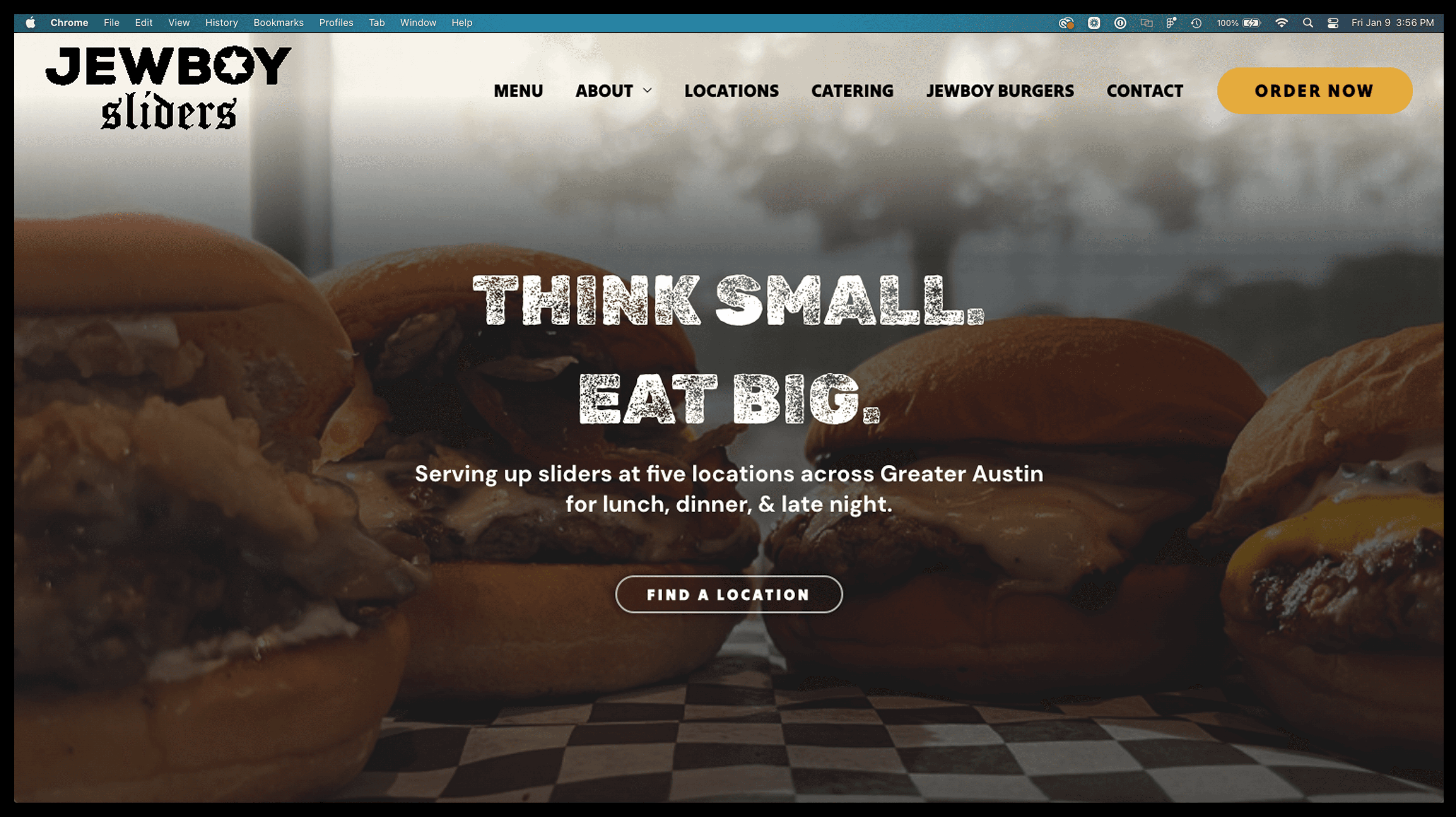

Project Description
This project focused on refining the visual interface of an existing product to improve clarity, hierarchy, and brand alignment. The scope was intentionally UI-driven rather than research-led.
TIMELINE
From explorations to final designs in 2 months while working with multiple projects at the same time and a very flexible timeline.
BACKSTORY
Back in my food trailer days, I was parked at a little spot on Burnet Street. My neighbor was Mo Pittle, owner of JewBoy Burgers—a wildly good Tex-Mex and Jewish fusion of burgers and burritos. Curious? You should be.
Mo is one of those people who genuinely shows up for others, and he helped me out a lot during those early days. Eventually, I stepped away from the food trailer world, but he stuck with it, and I got to watch his business grow and evolve over the years.
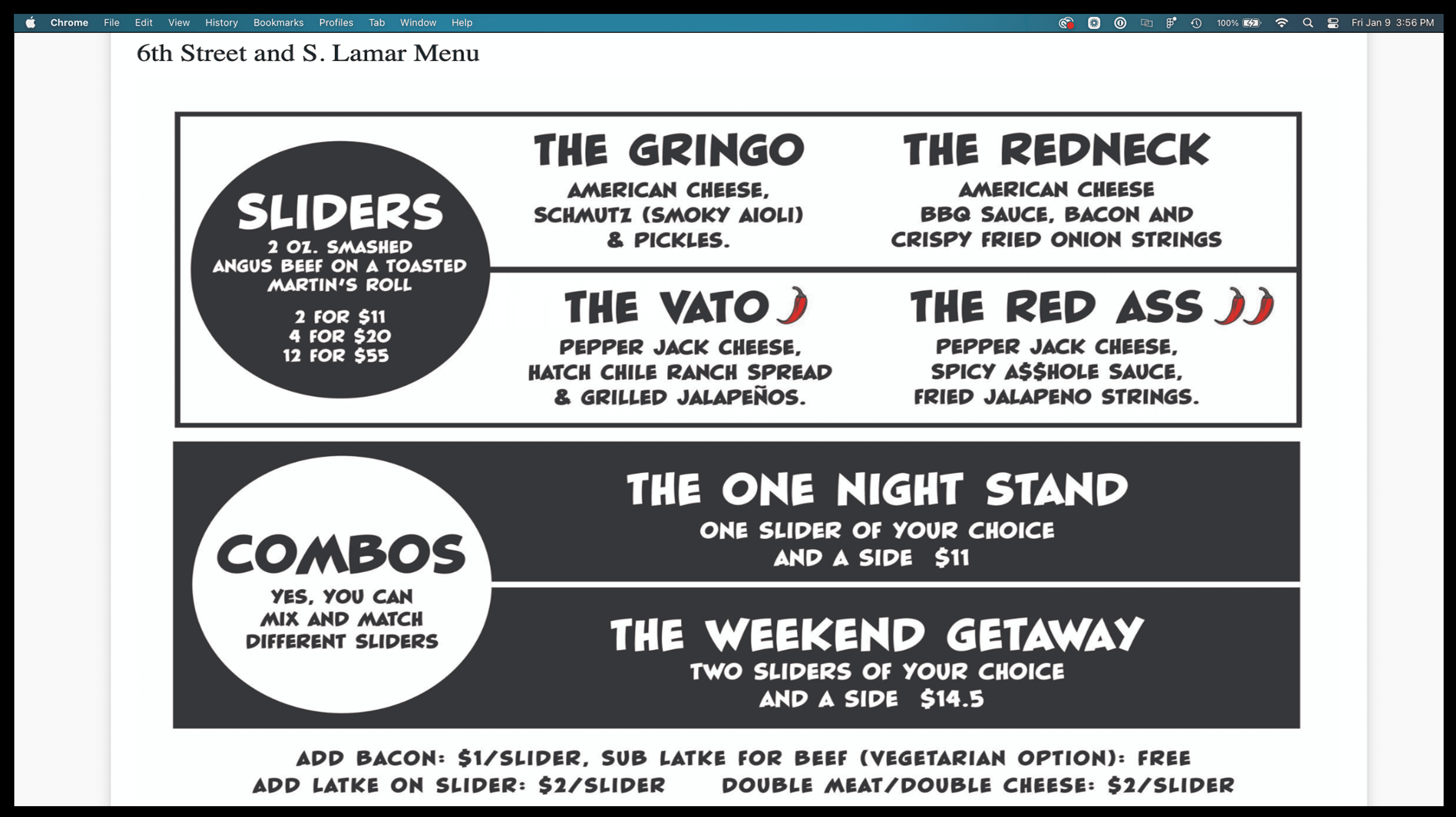
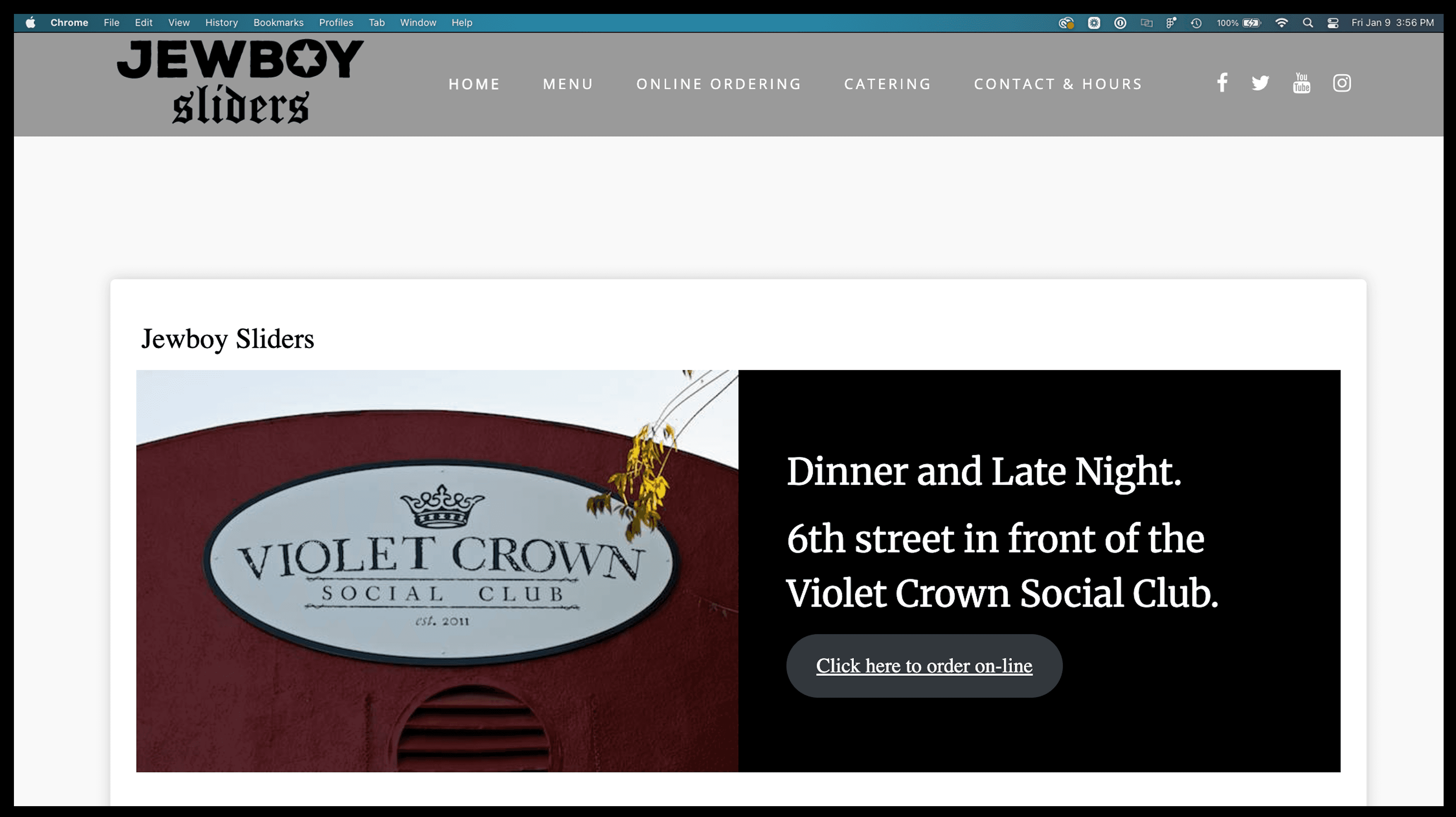
Fast forward a bit, and Mo launched a new concept called JewBoy Sliders, quickly expanding to multiple food trucks around Austin. As the brand grew, the website stayed…pretty basic. It was built on a simple template that didn’t do much to help customers find locations, place orders, or understand the full scope of the business.
Process
This section outlines how the work unfolded, from research through final design decisions.
Intent
This redesign was built for burger lovers in Austin — a site with fresh photography, a clear way to order, a flexible layout, and a locations experience that feels simple and intuitive.
Research & Planning
To inform the design, I reviewed a range of local and national burger websites. Looking closely at maps, menu structure, and calls to action helped clarify what works and where things often break down.
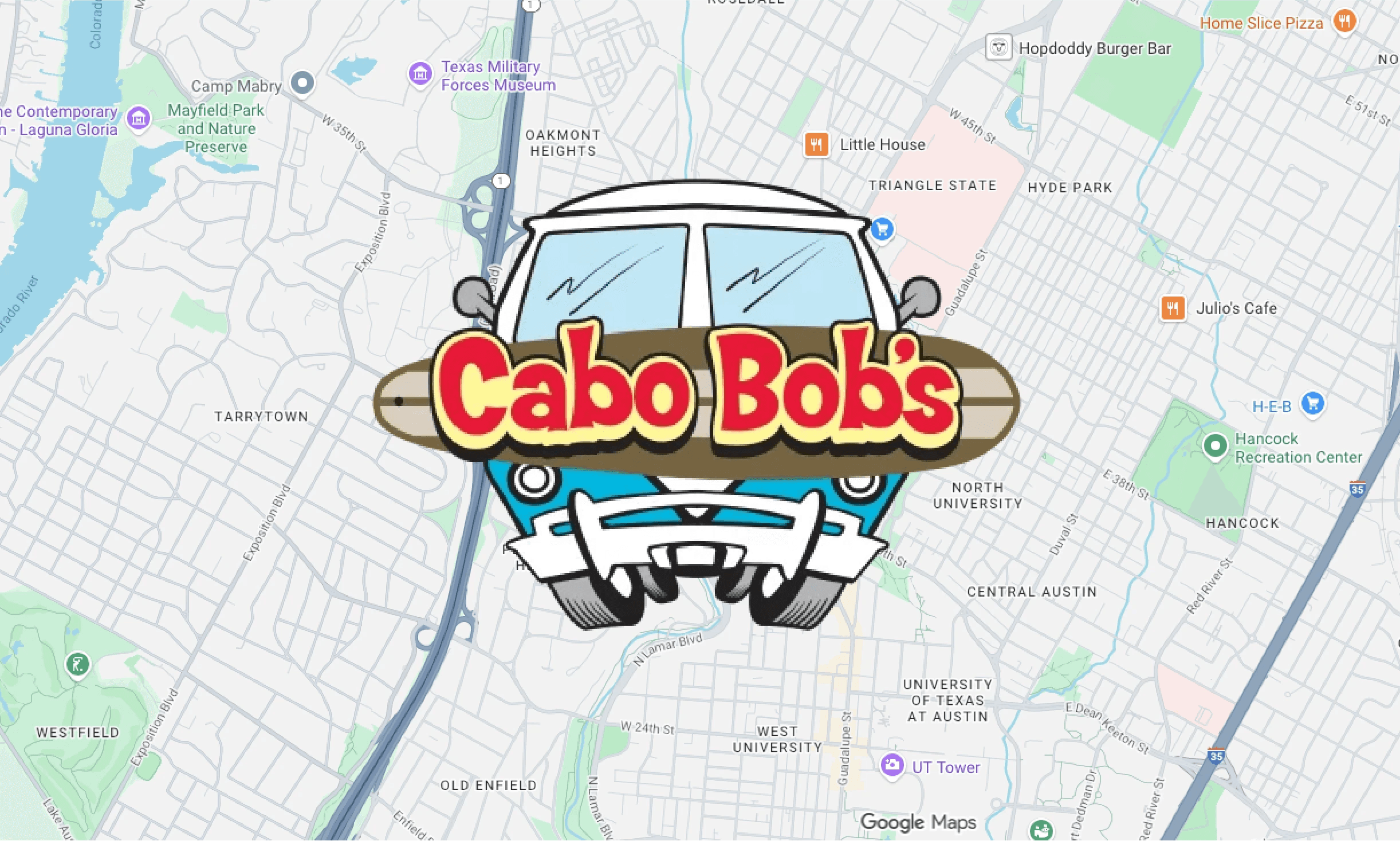
Clear Map with Store Info
A custom pinpoint and location-specific details make finding each spot simple and intuitive.
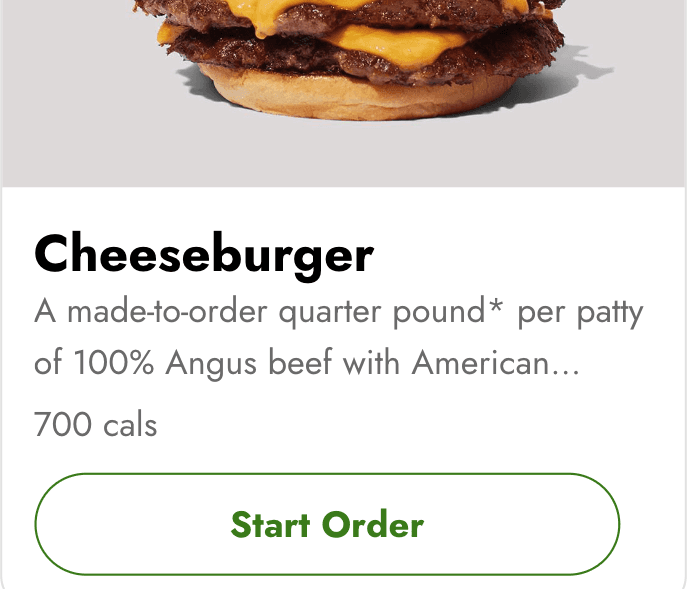
Organized Menu with Pics
Shake Shack’s site stood out for its clear menu photography and a call to action that leads directly to the location map.

Order From Every Page
Chuy’s places an “Order Now” button directly in the navigation, making it accessible from anywhere on the site.
CONTraints
This project meant learning WordPress from scratch, navigating a plugin-based platform, and making careful choices to keep the site simple.
Starting from a bare-bones WordPress setup forced me to slow down and learn the platform. That constraint led to a more intentional use of plugins that added real value without overcomplicating the site.
DEsign principles
Clear Visual Hierarchy for Scanning
Structure each page so the important information surfaces first.
Emphasis on primary action
Keep ordering visible and accessible throughout the experience, not buried or delayed.
Consistent rhythm and spacing
Build a steady visual rhythm so the interface feels cohesive from page to page.
Brand expression through type and color
Use type and color to express the brand, but never at the expense of clarity.
Solution
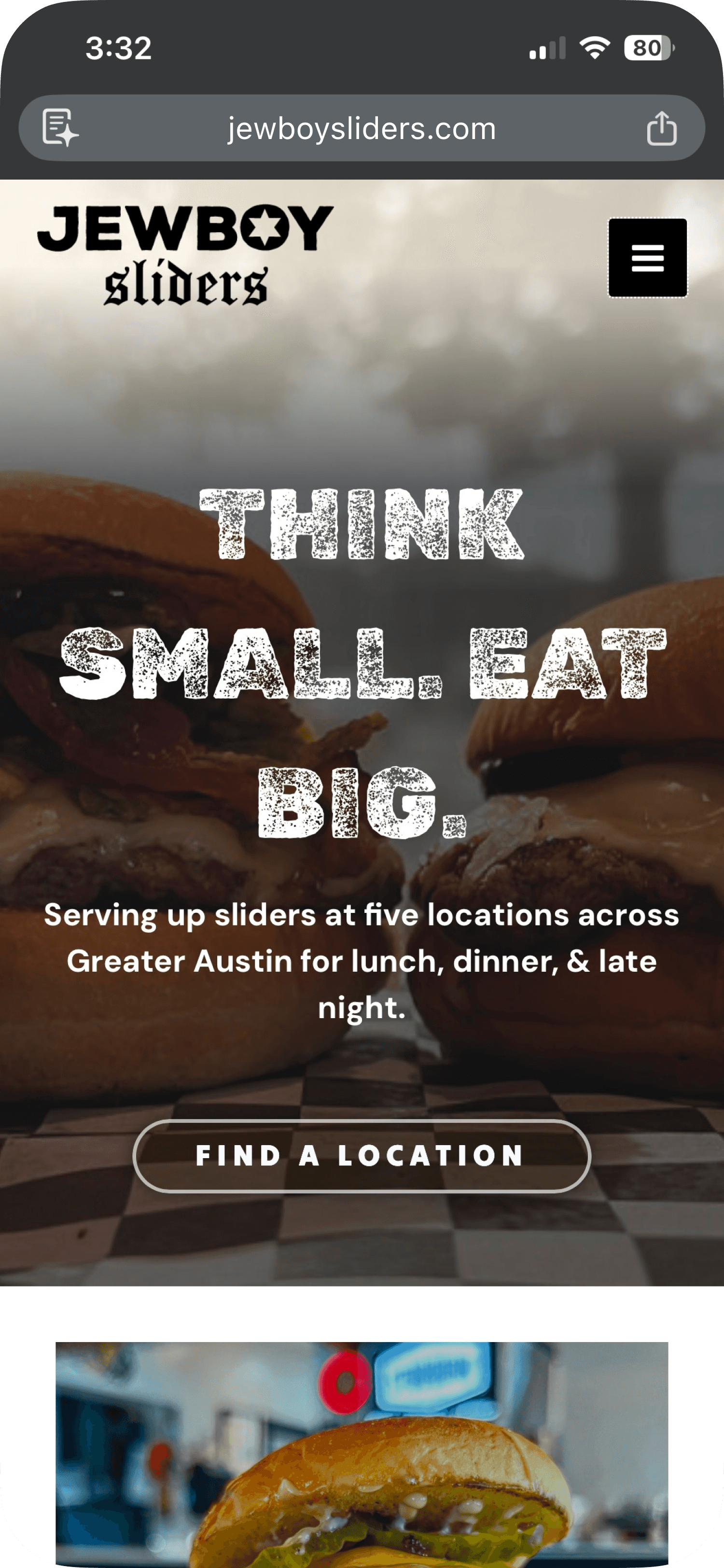
The final website centers bold visuals, clear ordering paths, and an intuitive structure that makes key information easy to find.
Interactive locations map
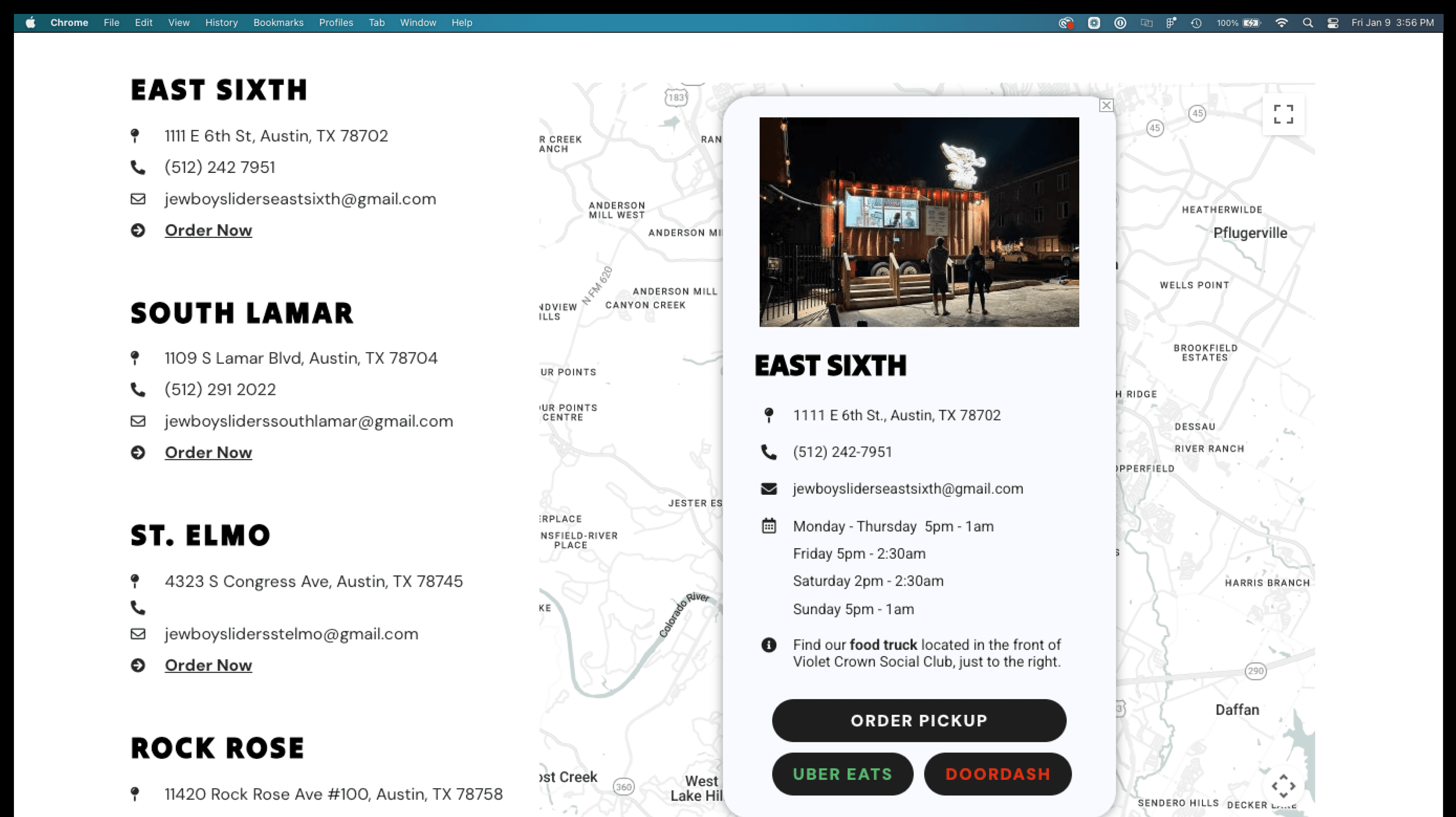
The locations section centers on an interactive map with custom pinpoints. Each location reveals its own details — hours, address, contact info, access notes, and direct ordering options — so users can quickly understand where to go and how to order.
cms-based menu system
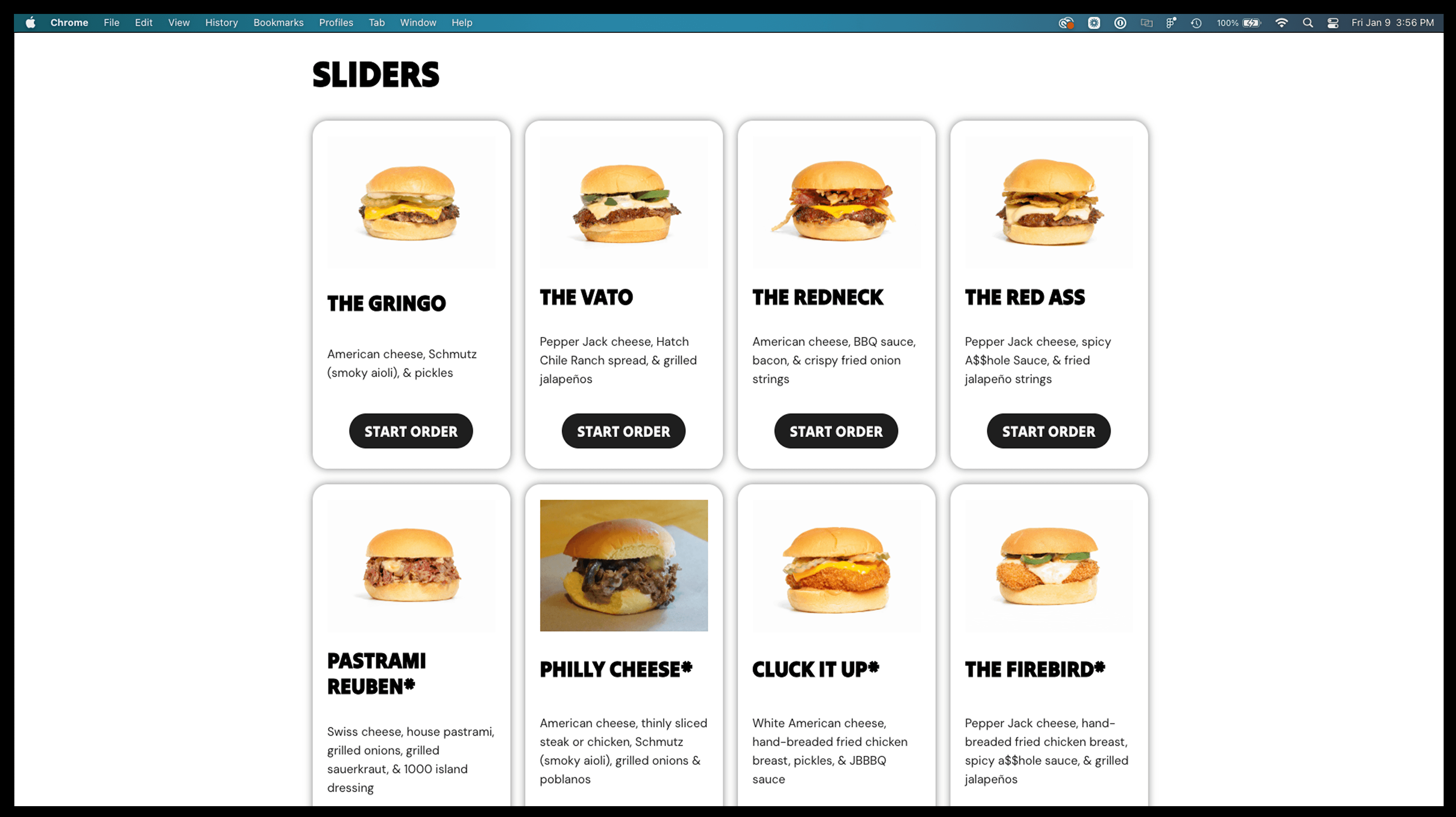
Replacing the PDF menu with a CMS-based system allows menu items to be updated, added, or removed without redesigning the page.
navigation simplification
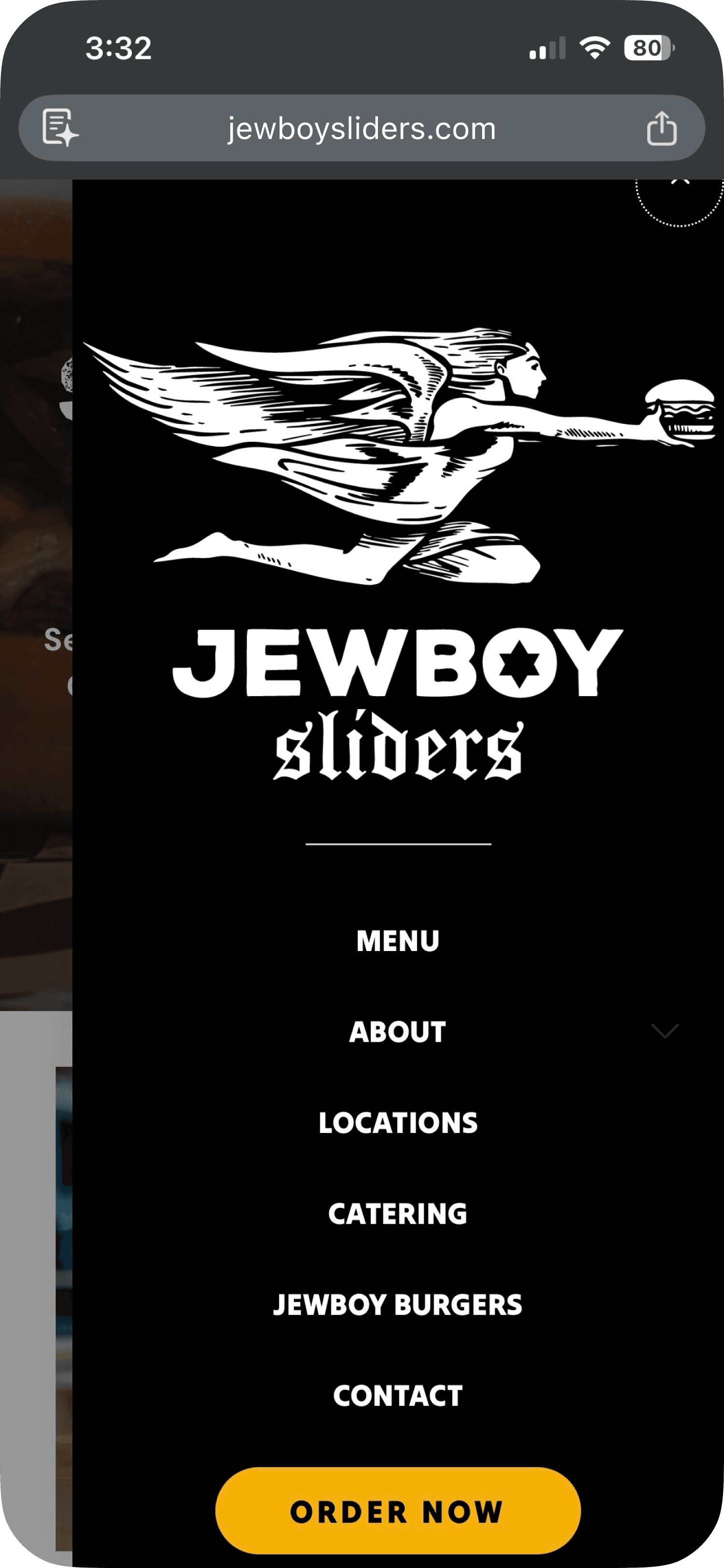
The navigation was simplified by removing unnecessary icons, clarifying page structure, and adding a persistent order button. Key pages are easier to reach, and ordering is always visible.
Mobile optimization
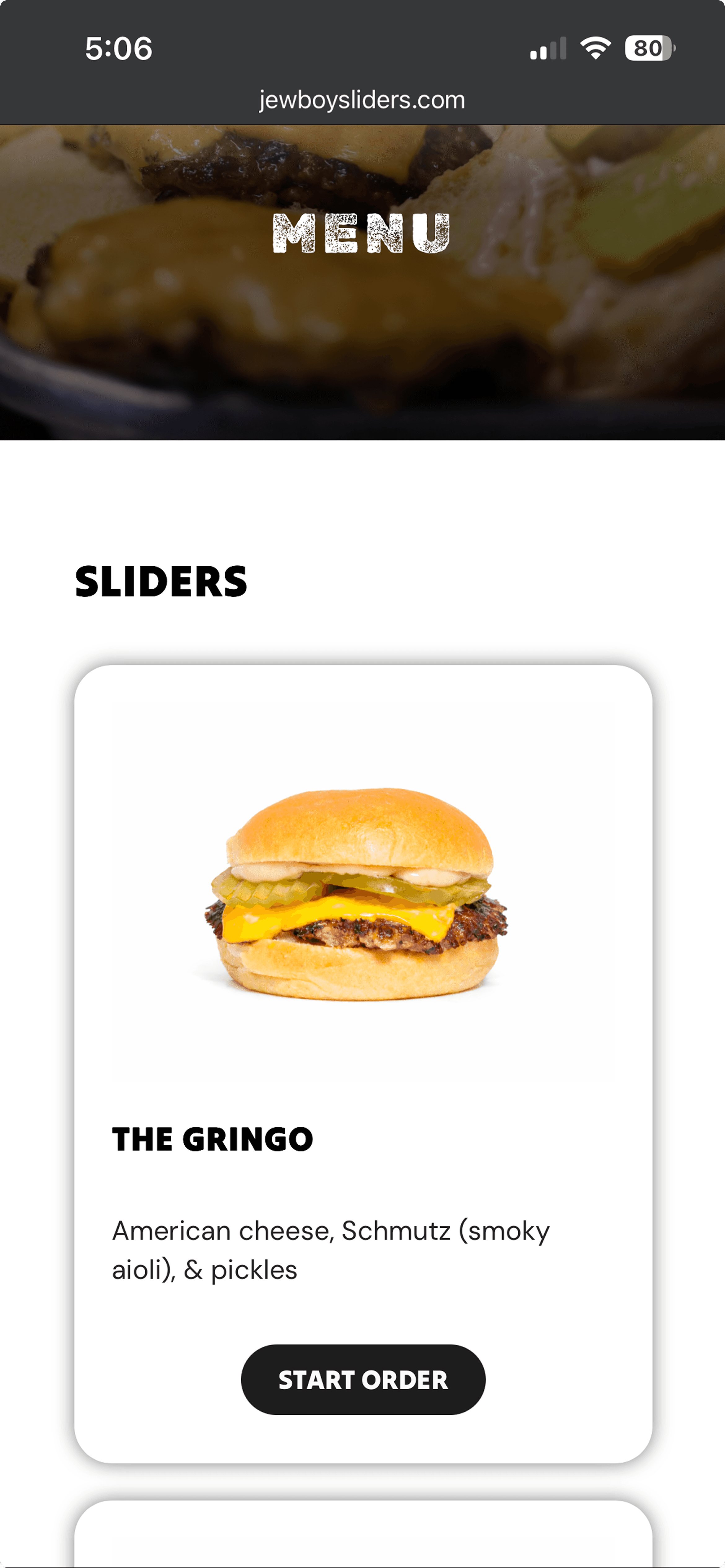
Mobile views were optimized for clarity and tap targets, with streamlined layouts and always-visible paths to ordering.
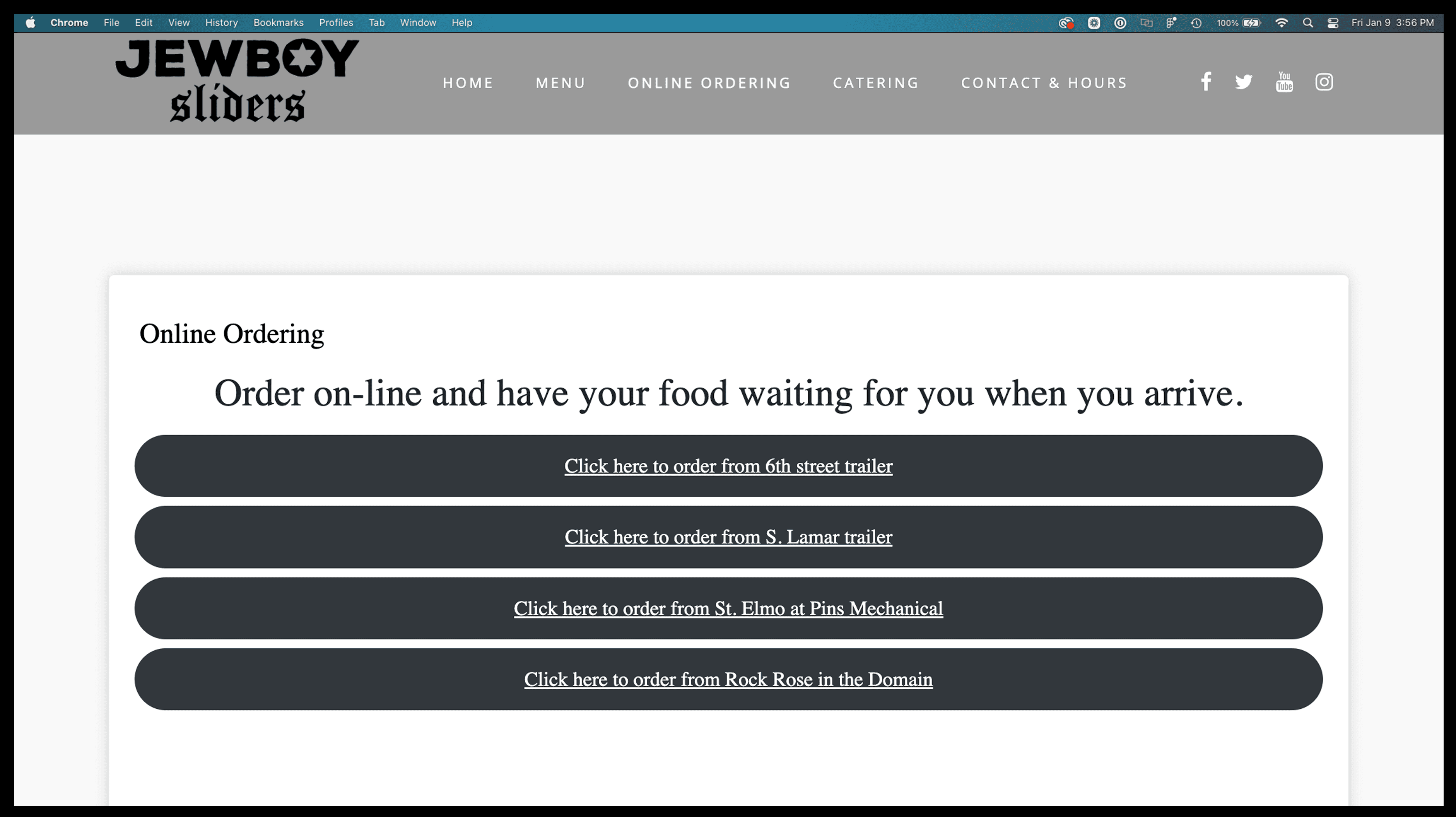

Outcome
The redesign resulted in a clearer, more flexible website structure. Ordering and location details are easier to find, the menu is simpler to maintain, and the site is better set up to evolve as the business grows.
operational improvements
Moving to a CMS-based structure makes updating menus, locations, and links faster and less manual.
Clear Paths
Ordering and location details are now easy to find, with fewer steps and less guesswork.
Scalibility
The new layout and page structure create a foundation that can adapt as the business grows.